Private, technology-enabled transitional accommodation designed around safety, dignity and independence.
NAPpad provides individual, secure accommodation for people who need privacy, safety and stability at a vulnerable or transitional point in their lives.
Developed with input from people with lived experience alongside frontline operators, housing and mental-health professionals, former military personnel and other specialists, NAPpad combines private accommodation with integrated safeguarding and intelligent technology.
Developed with lived experience. Proven first in homelessness. Designed for wider application.
Why would someone choose to remain on the street when accommodation was available?
For founder Peter Wood, the answer couldn’t simply be that more beds were needed. If people felt unable or unwilling to use the accommodation being offered, there was a different problem to understand.
So before trying to design the solution, Peter went to the people who understood the problem.
He spoke with people sleeping rough and those who had experienced homelessness. He listened to people trying to remain in employment while homeless. He brought together frontline organisations, housing and mental-health professionals, local authorities, people with military experience and specialists who could help turn those conversations into something practical.
What emerged wasn’t simply another place to sleep. Give someone their own space. Their own door. Security. Privacy. Dignity. And the opportunity to regain enough stability to take the next step.
Those principles became NAPpad.
The structure is deliberately simple. The thinking behind it isn’t.
Designed with the people who understood the problem
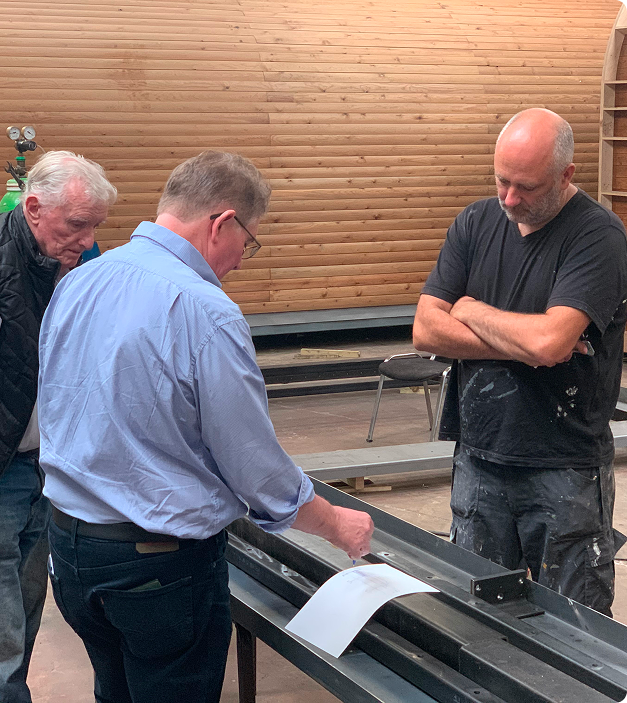
NAPpad was not designed in isolation
From the earliest concept and throughout its development, we engaged with people who understood vulnerability and temporary accommodation from very different perspectives.
That combination mattered.
The people who might use the accommodation could tell us what made them feel vulnerable, what stopped them using existing provision and what would make somewhere feel safe.
The people responsible for supporting them could explain the operational, safeguarding and practical challenges.
And specialists involved in the design and build could help turn those requirements into something that could work in the real world.
The result was not accommodation designed for one label or one type of person.
It was accommodation designed around recurring human needs: privacy, safety, dignity, security and the opportunity to regain stability.
One principle. different needs.
The circumstances that lead someone to need temporary accommodation can be very different. They may be sleeping rough. They may be working but unable to secure or sustain suitable accommodation. They may need somewhere safe following a crisis. They may find communal accommodation difficult because of previous experiences or trauma.
What can be remarkably similar is the immediate need:
Somewhere private. Somewhere secure. Somewhere they can close the door and feel safe.
NAPpad has therefore been designed as a flexible accommodation platform rather than around a single label or service-user group.
Homelessness & Transitional Accommodation
Operationally proven
For people who may be unable or unwilling to access conventional emergency, hostel or shared accommodation, as well as those trying to maintain employment and independence while experiencing housing insecurity.
Veterans & Specialist Accommodation
Privacy, security and individual space
The principles behind NAPpad may also have application within accommodation for veterans and others for whom conventional communal environments may not be appropriate, including some people affected by trauma.
Emergency Safeguarding
Potential configurations for people in crisis
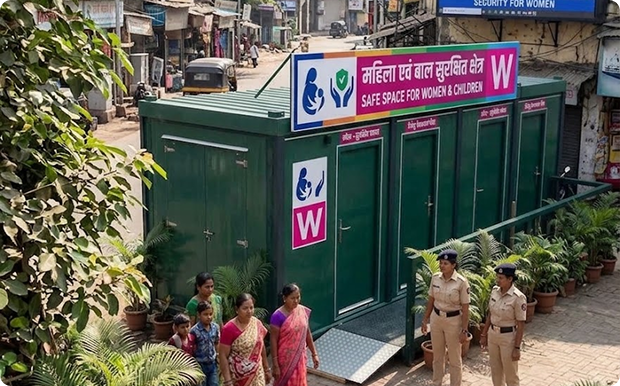
The principles of private space, controlled access and integrated safeguarding create potential applications for women and girls fleeing or at immediate risk of violence, abuse or exploitation.
NAPpad is not intended to replace specialist refuges or statutory safeguarding services. It can provide an additional accommodation option within an appropriately managed safeguarding pathway.
Emergency & Humanitarian Accommodation
Future application of the platform
The modular, relocatable and flexible infrastructure principles behind NAPpad create potential future applications within emergency response, disaster recovery and humanitarian accommodation.
Two core NAPpad configurations
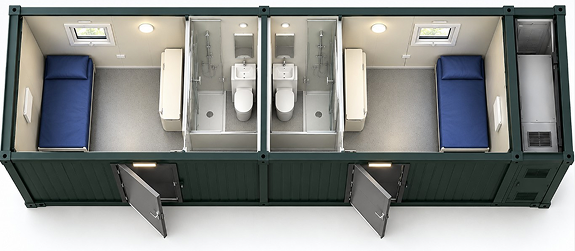
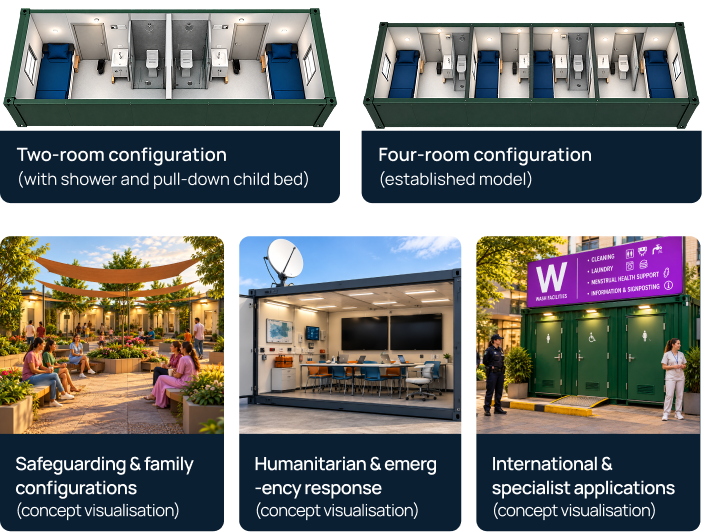
4-room NAPpad
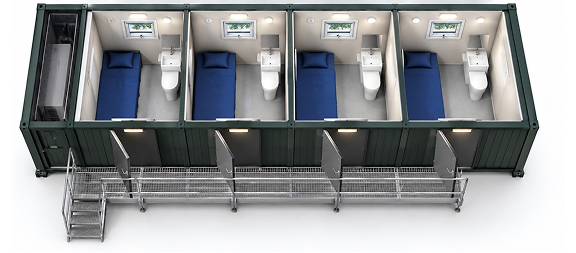
Four individual private accommodation spaces, each with its own secure external entrance and facilities.
1847mm × 2900mm
2-room NAPpad
Two larger private accommodation spaces. The additional internal space allows for a shower and a pull-down child’s bed, supporting configurations such as parent-and-child accommodation.
3693mm × 2900mm
Specialist configurations can be developed around the intended service, site and operational requirement.
Need help getting a project off the ground?
We can also help explore potential sites, planning considerations and funding (NAPpad rental fleet planned for early 2027) options.
Different people, services and sites need different things.
NAPpad can therefore be configured around the intended use rather than requiring every organisation to adopt a single specification.
Accommodation Options
Standard four-room NAPpad
Larger or reduced-room configurations
Accessible configurations
Shower facilities
Enhanced storage
Television and additional amenities
Parent-and-child configurations
Safeguarding & Technology
VytalProtect
Contactless radar monitoring
Occupancy and presence awareness
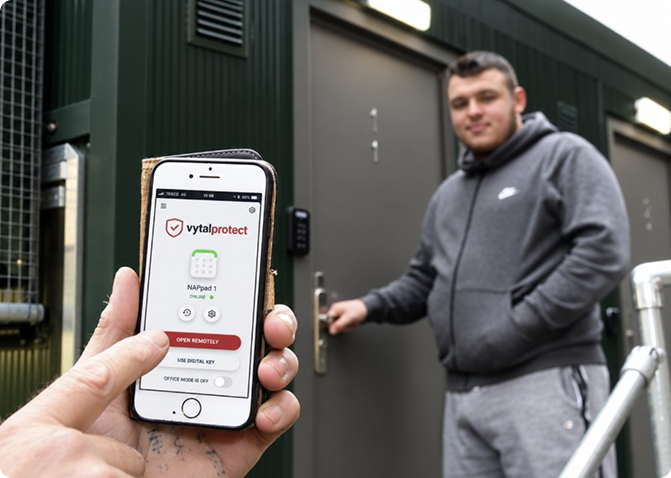
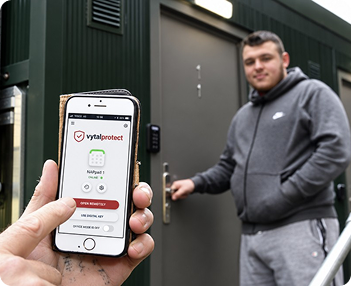
Electronic access control
External CCTV
Fire protection
Remote alerts and operator information
Infrastructure & Deployment
Mains connected
Communications/connectivity
Alternative water and waste arrangements
Greater standalone capability where required
The appropriate configuration is determined by the intended service, site, operating model and relevant regulatory requirements.
What is a NAPpad?
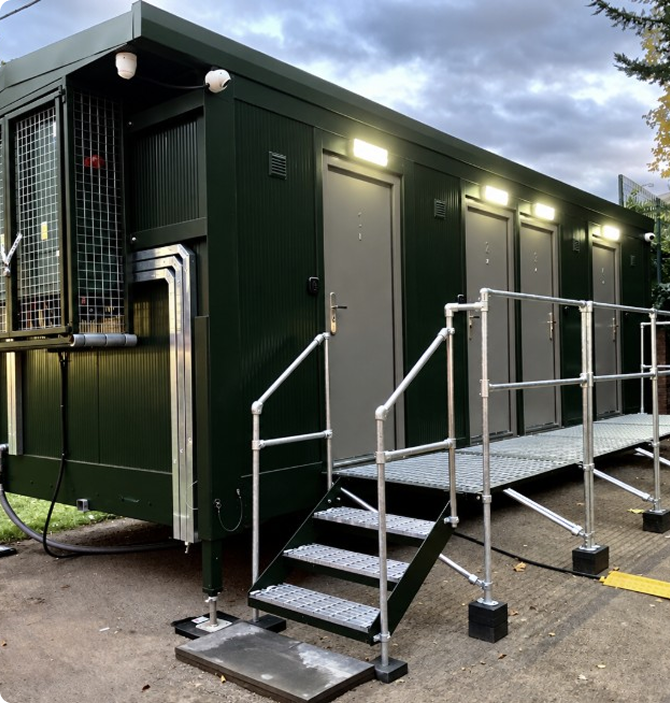
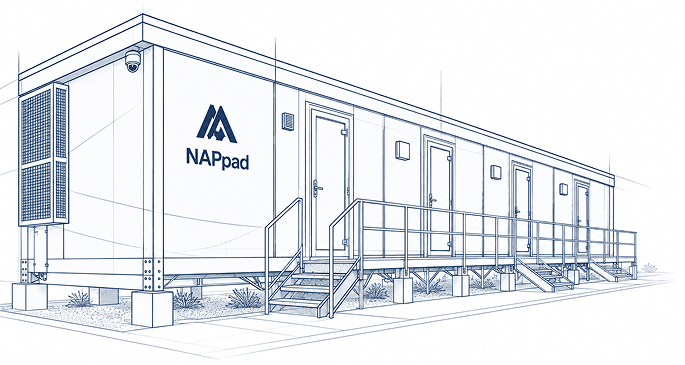
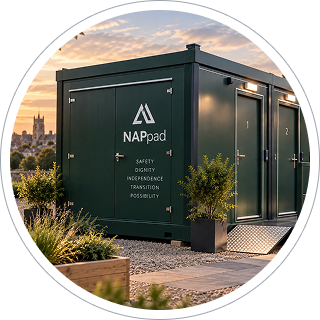
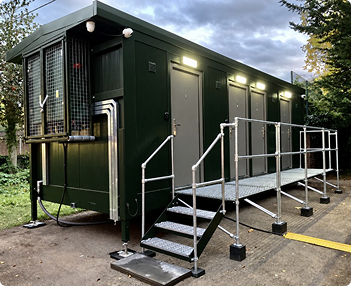
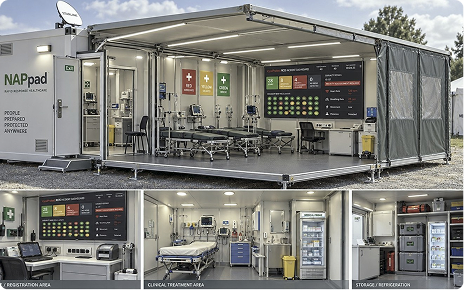
A NAPpad is a modular accommodation unit that can be configured around different needs.
The established configuration provides four individual private rooms, each with its own entrance and facilities.
Each resident has their own space including:
Bed
Toilet & wash basin
Ventilation
Power & charging
Heating
Secure individual access
Built around the person. connected around the operator.
Around the accommodation sits VytalProtect, NAPpad’s integrated safeguarding, security and technology layer.
VytalProtect brings together appropriate technologies within a single operational solution. Depending on the application, this can combine Vytalsign technology with selected specialist systems from established technology partners, allowing the technology configuration to be designed around the environment, risks and operating model rather than a fixed equipment specification. Illustrative capabilities can continue to include secure electronic access, contactless monitoring, perimeter CCTV where appropriate, fire/safety systems, remote alerts, communications/connectivity and connected information.
Contactless Monitoring
Presence, movement and
selected physiological indicators without requiring cameras or wearable devices inside the private accommodation.
Intelligent Access
Keypad, digital key, fob and remote access management options.
External CCTV
Appropriate security coverage around the NAPpad and its immediate external environment without intruding into residents’ private rooms.
Fire & Safety Systems
Integrated protection
appropriate to the
accommodation and operating environment.
Remote Alerts
Information delivered to
authorised operators to support their own welfare and response arrangements.
Connected Intelligence
Technology and information
brought together through the VSI Intelligence Hub.
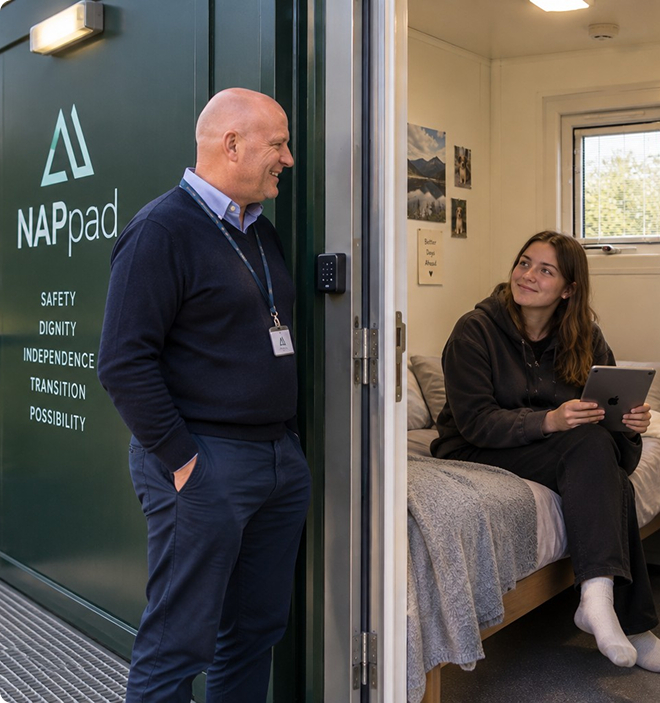
Designed around both sides of the door
Inside the door is someone who needs to feel safe.
Privacy.
Warmth.
Security.
Dignity.
Somewhere to sleep and regain a degree of stability.
Outside the door is someone who needs to feel safe.
Safeguarding.
Access control.
Welfare.
Security.
Operational oversight.
Appropriate intervention when something goes wrong.
NAPpad was designed with both in mind.
Technology doesn’t replace people, professional judgement or good safeguarding practice.
It gives the people responsible for the service another layer of information and assurance with which to work.
PEOPLE FIRST
SAFER SPACES
STRONGER TOMORROWS
What makes NAPpad different?
There are many ways of providing temporary accommodation.
NAPpad was developed for circumstances where simply providing another bed may not solve the problem.
Privacy without isolation
Individual accommodation rather than requiring someone to sleep within a communal environment.
Security they can control
Residents can close and secure their own door and retain greater control over their personal space and belongings.
Safeguarding without cameras in the room
Contactless technology can provide additional welfare and occupancy information without requiring cameras within the resident’s private accommodation or requiring them to wear a device.
Intelligent access
Operators can manage authorised access while residents retain the privacy and security of their own space.
Greater operational visibility
Alerts and connected information can support operators in managing welfare, security and risk.
NAPpad isn't simply a sleep pod with technology added to it.
The technology forms part of the safeguarding and operational philosophy behind the accommodation.
Proven first in homelessness
Homelessness provided the first real-world test of the NAPpad concept.
It was a demanding environment in which residents could be experiencing trauma, poor physical or mental health, addiction, disrupted employment, financial insecurity or difficulty accessing conventional services.
NAPpad provided an alternative for people who could not, or would not, use conventional homelessness accommodation.
22 out of 24
people who stayed in the NAPpad during the York deployment subsequently moved on to more suitable accommodation.
That experience demonstrated that the combination of private accommodation, security, safeguarding and appropriate support could work in practice.
It also provided valuable operational experience that has informed the continuing development of the NAPpad.
NAPpad is not intended to be the destination.
It provides a safe and stable place from which someone can take the next step towards more suitable accommodation.
The people responsible for supporting them could explain the operational, safeguarding and practical challenges.
From Proven Application to a Configurable Platform
NAPpad began with a specific challenge: creating a safe, private first step away from rough sleeping for people who may not engage with conventional accommodation.
But the first deployment did more than demonstrate the accommodation concept. It gave us the opportunity to learn from real-world use and use that experience to develop NAPpad further.
Proven
Real-world homelessness deployment
NAPpad began with a specific challenge: creating a safe, private first step away from rough sleeping for people who may not engage with conventional accommodation.
Refined
Operational learning incorporated
into the platform
Real-world deployment provided practical learning around accommodation, security, access, safeguarding, maintenance and service delivery. That experience has informed ongoing improvements to the NAPpad, including materials, thermal performance, access control, VytalProtect technology, manufacturing and deployment.
Configurable
Accommodation, technology and infrastructure adapted around different requirements
NAPpad has developed into a configurable platform. Room layouts, facilities, safeguarding technology, utilities, connectivity and infrastructure can be adapted for different applications and environments.
The application can change. The principles behind NAPpad don’t.
Privacy
Safety
Dignity
Security
Stability
Wider applications
The same principles are now informing development for other environments in which people may need rapidly deployable, private and secure space.
This includes safeguarding and family configurations, humanitarian accommodation and specialist emergency-response applications.
The principle remains the same: start with the people, the environment and the operational requirement, then configure the accommodation and technology around them.
“It would have meant not having to choose the street over a hostel.”
Jay
former rough sleeper
“Protectal are the only people I have known, in
decades of working with homeless people, who asked us for our opinion.”
Gary J.
Charity Housing Services Support Officer
"It was especially encouraging to see how positively the service users engaged with the project. The whole initiative, and the outcomes it is delivering, are inspiring.”
Isabella Harris
Housing Justice
More than the NAPpad
Helping make deployment possible
Identifying an accommodation requirement is one thing.
Turning it into an operational service can involve funding, land, planning, infrastructure, safeguarding and operational considerations.
Drawing on experience from developing and deploying NAPpads, we can help organisations work through those issues.
Funding Options
Retain the existing cautious wording around outright purchase and funding/commercial options. Do not imply finance is guaranteed.
Planning & Site Strategy
Use the existing site-specific planning wording. Do not imply NAPpad is exempt from planning requirements.
Mobilisation & Operational Readiness
Use the existing site-specific planning wording. Do not imply NAPpad is exempt from planning requirements.
Safeguarding & Partner Engagement
Use the intended partner/safeguarding engagement copy rather than funding copy.
Technology & Monitoring
Use the intended training/technology/monitoring copy rather than funding copy.
Maintenance & Operational Learning
Use the intended maintenance and lessons-learned copy rather than funding copy.
Our Partners
Clear responsibilities
Successful services need clear responsibilities.
NAPpad
Design, manufacture, agreed technology integration, factory testing, delivery, commissioning, documentation and training within the contracted scope. Quality British engineering and design.
VytalProtect
The integrated safeguarding, monitoring and protection technology layer. Patented technology and software from UK.
Protectal
Planning, mobilisation, implementation and operational advisory support where required.
The Operator
The organisation running the service remains responsible for staffing, resident engagement, safeguarding decisions and procedures, responding to alerts, operating procedures and day-to-day service management.
Technology supports good operational practice. It does not replace it.